
The Benefits of Osteopathy for Babies: A Gentle Path to Healthy Development

Watching a baby grow and develop is one of life’s greatest joys. However, sometimes minor motor skill challenges or physical discomfort can make this journey more difficult for both the child and the parents. Here, I want to share how osteopathy for babies can be a gentle and effective way to support your child’s health and development. Combined with baby motor skill development, osteopathy can create a strong foundation for your child’s well-being.
What is osteopathy for babies, and why is it important?
Osteopathy is a manual treatment approach that focuses on the body’s mobility and balance. When it comes to babies, the aim is to help the body find its natural rhythm and function. Babies may experience tension or restrictions in muscles and joints, which can affect their motor development and general well-being.
Osteopathy for babies is gentle and adapted to the small body. Treatment may help relieve discomfort, improve sleep, and support harmonious development. It can be especially relevant if the baby has had a difficult birth, colic, or if there are concerns about motor development.
Example: A baby who has difficulty turning their head to one side may have tension in the neck. Osteopathy may help release this tension, allowing the baby to have better freedom of movement.
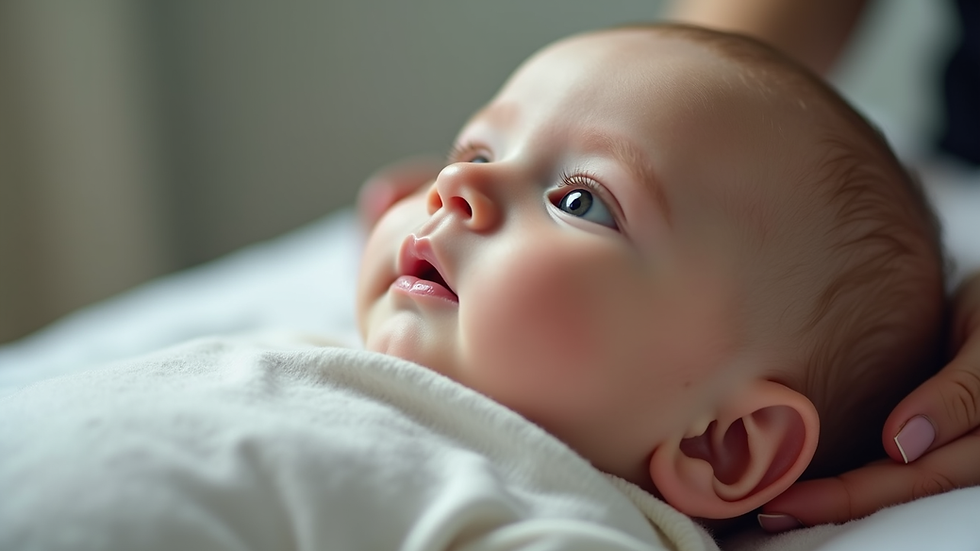
How osteopathy for babies can support motor development
Motor development is about how babies learn to move from lifting their head to crawling and walking. When the body functions optimally, this development becomes easier and more natural. Osteopathy can support this process by helping ensure that the muscles, joints and nervous system work together without restrictions.
By treating tension and imbalances, the osteopath can help to:
Improve freedom of movement
Reduce discomfort that may limit movement
Support better posture and balance
This means that babies have better conditions for learning new movements and strengthening their motor skills.
Practical tip: As a parent, you can also support your baby’s motor development by giving your child tummy time every day. This strengthens the neck and back muscles and encourages movement.
Baby motor development and osteopathy: a natural combination
When I talk about baby motor development and osteopathy, I think of how these two elements together can create a strong foundation for your child’s development. Motor skills are about movement, and osteopathy helps the body move freely and without pain.
By combining exercises that strengthen motor development with osteopathic treatment, we can help ensure that the child not only learns to move, but does so in a healthy and sustainable way. This may help prevent future problems such as asymmetries, tension or poor posture.
Example: A baby who receives osteopathic treatment for tension in the back may find it easier to learn to sit up and crawl, because the body is more relaxed and balanced.

When should you consider osteopathy for babies?
It can be difficult to know when osteopathy may be relevant for a baby. Here are some signs that may indicate that an osteopathic assessment could be beneficial:
The baby has had a difficult or prolonged birth
Colic or frequent unsettledness without a clear cause
Difficulty turning the head or a tilted head position
Problems with sucking or feeding
Sleep problems or frequent waking
Delayed motor development or asymmetry in movement
If you notice any of these signs, it may be a good idea to get a professional assessment. Osteopathy for babies is gentle and adapted, so it should never be a strain on the child.
How osteopathic treatment for babies works
When you visit an osteopath with your baby, the treatment always starts with a thorough conversation. Here, I ask about the child’s history, birth, sleep, motor development and any challenges. This is followed by a gentle examination, where I assess for tension and imbalances in the body.
The treatment itself is very gentle and adapted to the baby’s needs. It may involve light pressure, stretching or joint mobilisation. The aim is to help the body find its natural balance and freedom of movement.
After treatment, the child may feel calmer and more relaxed, and parents are often given useful advice on how they can support their child’s development at home.
Tips for parents after treatment:
Give your baby time to rest and process the treatment
Continue with daily motor exercises and play
Pay attention to your baby’s signals and needs
Choosing the right clinic in Copenhagen
When looking for osteopathy for babies in Copenhagen, it is important to choose a clinic with experience in treating the youngest patients. A good osteopath understands how delicate a baby’s body is and adapts the treatment accordingly.
At Flow-Osteopathy Clinic, we work with a holistic approach, looking at the whole body and the child’s overall well-being. We aim to give you and your child a safe and positive experience, where you feel seen and understood.
It is also important that the clinic offers individual advice and follow-up, so the treatment can be as effective as possible.
Supporting your child’s motor development and well-being through osteopathy can be a caring investment in their future. With gentle treatment and a focus on the body’s natural balance, we can work together to create the best conditions for a happy and healthy start in life. Remember, small steps every day can make a big difference.
I hope this guide has given you clarity and inspiration to take the next step for your child’s health.


Comments